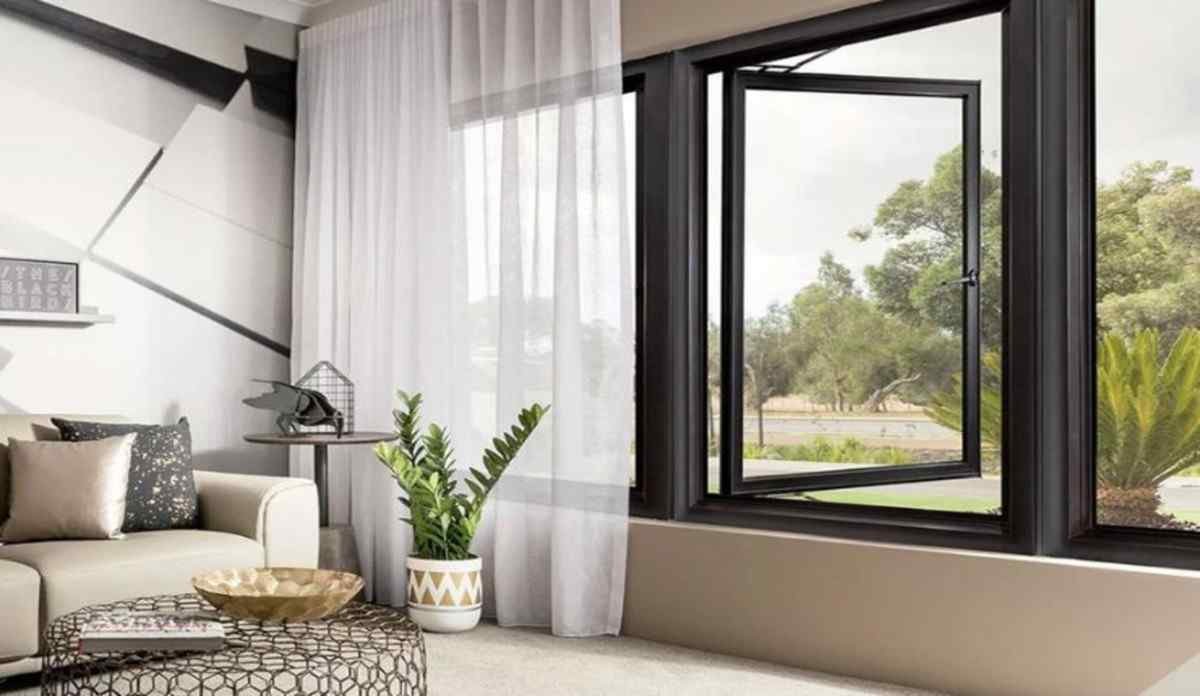
Aluminium casement windows open fully outward on side hinges, operated by a crank or handle. They deliver 100% unobstructed ventilation, slim sightlines, and proven durability in harsh weather. Unlike sliding windows that only open halfway, casements seal tightly when closed, cutting air leakage by up to 35% according to NFRC data.
This guide covers exactly what matters: real performance numbers, common problems they solve, direct comparisons, and practical installation tips. No fluff — just the details homeowners and builders actually search for.
How Aluminium Casement Windows Work (and Why the Design Wins)
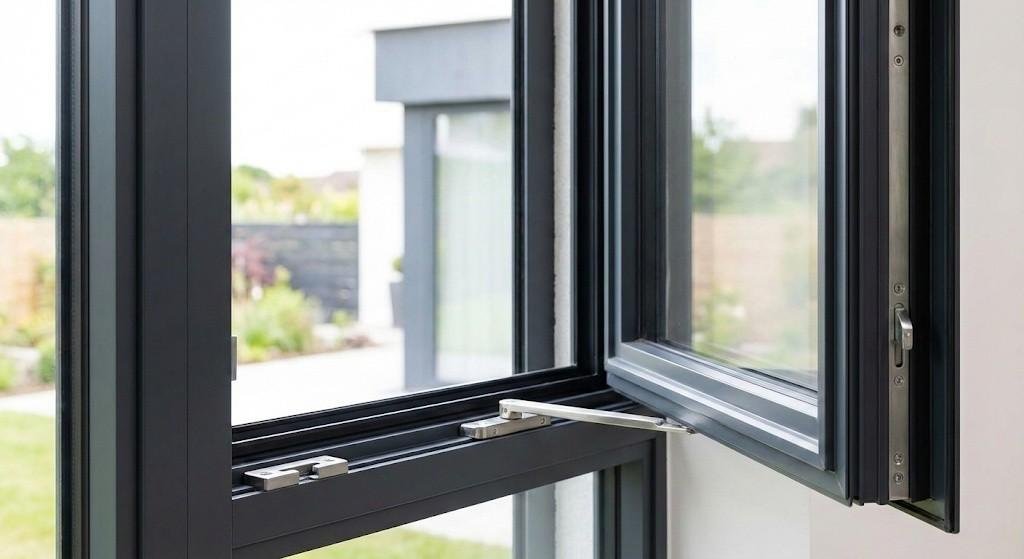
A casement sash is hinged on one side and swings outward like a door. A simple crank turns a gear that pushes the window open up to 90°. When closed, the sash presses firmly against the frame with compression seals, creating an airtight barrier.
Most modern frames use thermally broken aluminium — a polyamide strip inside the profile stops heat transfer. Independent tests show these frames reach U-values as low as 1.0 W/m²K with double glazing and 0.8 with triple. That’s 25-30% better than non-broken aluminium from 10-15 years ago.
5 Real Problems They Fix (With Numbers)
- Poor Ventilation Sliders open only 50%. Casements open 100%. In a 900 mm wide window, you gain roughly 0.9 m² of airflow — enough to drop indoor CO₂ levels 40% faster on still days (BRE study).
- High Energy Bills The UK’s Energy Saving Trust found properly sealed casements reduce heat loss by 18-22% compared to old single-glazed units. In a typical 3-bed house, that saves £110-£180 per year on heating.
- Weak Security Multi-point espag locks engage at 4-6 points. PAS 24 and Secured by Design testing shows casements resist forced entry 3-4 times longer than single-point sliders.
- Noise Intrusion With 32-40 mm acoustic laminated glass, casements cut external noise by 35-42 dB. That turns a busy road (70 dB) into library-level quiet (35 dB).
- Maintenance Hassle Powder-coated aluminium needs zero painting. A 10-minute wipe twice a year keeps it looking new for 25-30 years. Wood requires sanding and repainting every 5-7 years.
Aluminium Casement vs uPVC vs Wood vs Steel (2025 Pricing & Performance)
| Feature | Aluminium (Thermal Break) | uPVC | Timber | Steel |
|---|---|---|---|---|
| Expected Lifespan | 35-50 years | 25-35 years | 20-40 years | 40-60 years |
| U-Value (double glazed) | 1.0-1.4 W/m²K | 1.2-1.6 | 1.6-2.0 | 1.8-2.5 |
| Average Cost 1200×1200 mm | £420-£680 | £320-£520 | £580-£950 | £720-£1,200 |
| Weight per m² | 22-28 kg | 30-35 kg | 20-25 kg | 45-60 kg |
| Colour Fade Resistance | Excellent (25-yr warranty) | Fair (yellows in strong sun) | Requires paint | Excellent |
| Best Use Case | Coastal, modern, large spans | Budget new-build | Period homes | Industrial |
Aluminium wins when you need slim frames for bigger glass area without losing strength.
Design Options That Actually Matter
- Fixed + opening combinations for bay windows
- Top-light casements above doors (great for kitchens)
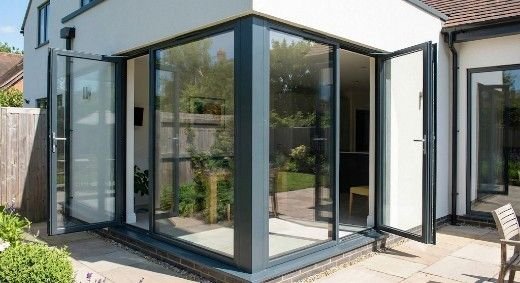
- French casement pairs (two sashes, no central mullion)
- RAL colour powder coating — 150+ shades with marine-grade option for coastal areas
- Integral blinds between the glass (zero dusting)
Maximum single sash size before reinforcement is needed: 950 mm wide × 1500 mm high (or 800 mm × 2100 mm high).
Installation: What Most Quotes Get Wrong
Measure the structural opening, not the old frame. Allow 10 mm all round for packing and foam. Use frame fixing lugs or clips every 400-600 mm. Never screw through the front face — it breaks the thermal break.
In hurricane zones, look for Miami-Dade or TDI-approved systems (e.g., YKK AP Yes 45 TU). They survive 200 km/h winds with laminated glass Aluminium Casement Windows.
Maintenance Schedule That Keeps Them Perfect
- Every 6 months: Wipe tracks, oil hinges with PTFE spray
- Every 2 years: Check gasket compression, adjust striker plates if needed
- Every 10-12 years: Replace perimeter foam tape if it hardens
- Glazing units: 20-25 year life before seal failure in normal conditions
Cost and Payback Reality Check
Average UK supply-only price in 2025:
- 900 × 1200 mm double-glazed, thermally broken: £380-£520
- Same size triple-glazed, argon-filled, warm edge spacer: £540-£720
Add £180-£280 per opening for professional installation.
With £140 average annual energy saving and zero painting costs, most systems pay back in 5-7 years. House price uplift is typically 2-4% according to Nationwide Building Society data on window upgrades.
For technical specifications and history of the casement design, see the Wikipedia entry on casement windows.
Ready to replace leaky windows that actually work with the breeze instead of against it? Measure your openings tonight — the difference in airflow and quiet is immediate.
